

Introduction
Managing corporate travel is no small task—especially when expenses, bookings, and policy compliance are spread across teams and tools. That’s where effective business travel reporting comes in. For finance, operations, and travel managers, clear and consistent travel data is essential for controlling costs, enforcing policies, and making smarter business decisions.
This guide is designed for companies that want to modernize their approach to business trip reports, whether they’re tracking spend post-trip, monthly, or quarterly. It covers everything from what to include in a report to how tools like Mesh Payments can help you improve reporting efficiency.
Main takeaways from this article:
- Business travel reports summarize key data like expenses, policy compliance, and vendor use—giving teams full visibility into travel activity.
- Accurate, centralized business travel reporting is essential for cost control, smarter budgeting, and enforcing corporate travel policies.
- Reports should include core components like spend by category, team, vendor, and policy exceptions to guide decision-making.
- Using a consistent business trip report template and visual dashboards makes reporting easier to manage and act on.
- Tools like Mesh automate expense categorization, flag policy violations, and deliver real-time travel dashboards—all from one platform.
What is a business travel report?
A business travel report is a document or dashboard that summarizes employee travel activity, related costs, policy compliance, and vendor utilization. It provides finance and operations teams with visibility into T&E spend trends, policy effectiveness, and opportunities to reduce costs. Depending on company structure, these reports can be created monthly, quarterly, or after each trip. Whether built from a trip report template or customized dashboards, these reports are key to optimizing travel programs.
Why business travel reporting matters
Business travel reporting isn’t just about tracking expenses — it’s the foundation for cost control, policy enforcement, and more informed, strategic decision-making. When structured well, a business travel report helps companies optimize spend, ensure compliance, and improve program efficiency.
Improve spend visibility
Without centralized business travel reporting, expenses often end up scattered across departments, corporate cards, and email threads. This fragmentation makes oversight difficult. A consolidated business travel report gives finance teams a clear view of where travel dollars are going. This visibility helps them identify spending patterns, optimize budgets, and flag anomalies early on. Leveraging a consistent travel report template ensures accuracy and transparency across all trips.
Enforce travel policy more effectively
A detailed business travel report reveals which departments or individuals consistently follow — or violate — corporate travel policies. With regular reporting, HR and finance teams gain data-driven insights to reinforce rules, adjust policies, and boost accountability.
Support better vendor management
A comprehensive business travel report highlights how frequently specific airlines, hotel chains, or car rental services are used across the company. This visibility allows finance and procurement to negotiate better rates, consolidate spend, and build stronger vendor relationships.
Enable smarter budgeting and forecasting
Regular business travel reporting makes it easier to predict future travel costs based on role, team, or seasonal trends. Each report gives finance teams the insights needed to allocate resources efficiently and avoid over- or under-spending.
Key components of effective business travel reporting
To drive smarter financial and operational decisions, every business travel report should include a core set of data points that provide a clear, actionable view of corporate travel activity and spend.
Travel spend by category
A detailed business travel report should break down spending across key categories like flights, lodging, ground transportation, meals, and incidentals. This level of granularity helps finance teams pinpoint high-cost areas and identify trends. With Mesh, expenses are automatically categorized—which reduces manual effort and limits errors.
Spend by department or team
An effective business travel report should include a breakdown of expenses by business unit, region, or cost center. This visibility helps identify where budgets are being over- or under-utilized, enabling more precise forecasting and ensures leaders have the insights they need to manage spend proactively.
Top corporate travel vendors and partners
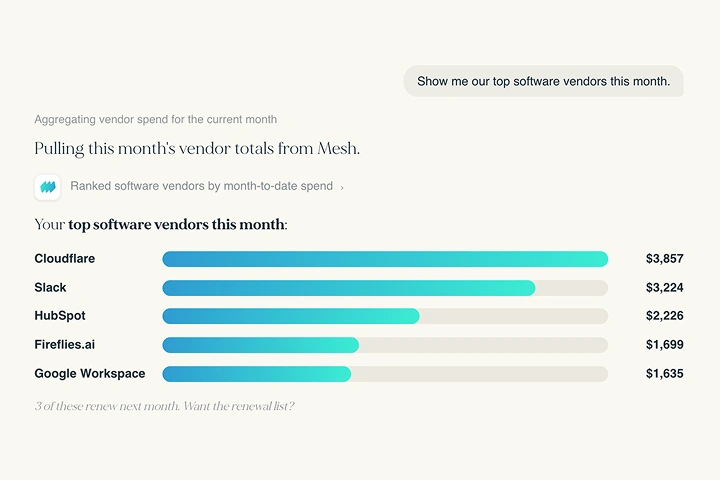
A strong business travel report highlights which airlines, hotel chains, and car rental agencies employees use most frequently. This insight supports smarter vendor negotiations and can lead to more strategic management and meaningful cost savings.
Policy compliance and exceptions
An effective business travel report should flag out-of-policy activity, such as over-budget bookings, last-minute reservations, or use of non-preferred vendors. These insights help reduce unnecessary spend and reinforce compliance. With Mesh, policy violations are flagged in real time and supported with audit-ready data, streamlining compliance monitoring.
Travel volume and frequency trends
Tracking the number of trips taken, by whom, and how often is a key element of effective business travel reporting. These insights help identify frequent travelers, evaluate travel intensity across roles or teams, and inform policies like trip caps or adjusted approval workflows.
How to structure a business travel report
To ensure consistency and clarity, companies should use a standardized business trip report template with filters for time period, department, region, and vendor. Whether using spreadsheets or dashboards, highlight KPIs like total spend, compliance rates, and savings vs. budget. Automated, real-time tools like Mesh simplify business travel reporting, helping teams avoid delays, data gaps, and manual work. A well-structured travel report template empowers faster, smarter decision-making.
Business travel report template
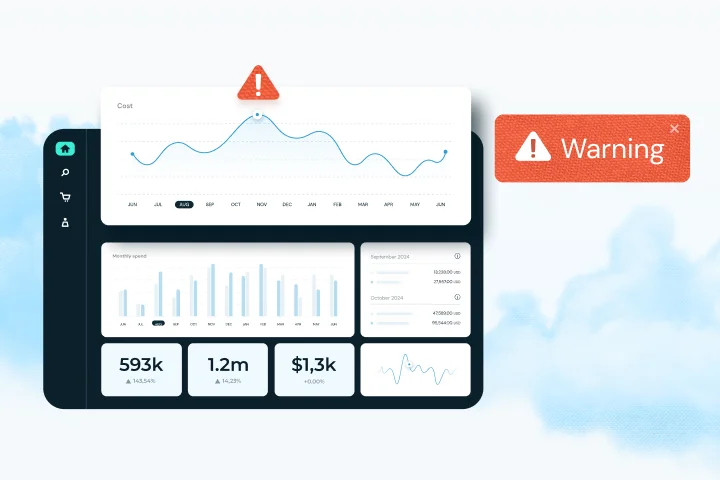
Here’s a quick look at what companies typically include in a business travel report, from spend categories and policy compliance to vendor usage and trip volume. Automation tools like Mesh streamline the entire process, taking the manual work out of building a report and delivering real-time, centralized insights. Below is a screenshot example of a visual, easy-to-navigate business travel reporting dashboard in Mesh Payments:

Best practices for business travel reporting
To make business travel reports more actionable and consistent, companies should follow a set of tactical best practices. The tips below can help streamline business travel reporting, improve data quality, and drive smarter decisions across teams.
Standardize reporting formats and KPIs
Use consistent business trip report templates to compare performance across different time periods, departments, or regions. Standardized formats should include core KPIs like total travel spend, savings achieved, and policy compliance rate. This structure ensures your business travel reports are both repeatable and actionable.
Use visuals and summaries to surface trends
Incorporate charts, heat maps, and executive summaries into your business travel report to help decision-makers quickly spot trends and act on insights. Visual elements make complex data more digestible and impactful. With Mesh, teams can leverage built-in reporting dashboards featuring customizable visualizations to elevate their business travel reporting experience.
Link travel data to broader expense reporting
To get a complete picture of employee spend, it’s essential to integrate business travel reporting with corporate card activity and broader T&E data. This linkage ensures all expenses — not just those from trips — are visible and trackable. Mesh centralizes spend across categories, enabling companies to manage total employee expenses from a single, unified platform.
Gather data based on business trip reports
Beyond numbers, collect qualitative feedback—such as travel outcomes, vendor feedback, or logistical challenges—can add valuable context to your business travel reporting. These firsthand takeaways help explain the “why” behind the numbers and can guide updates to travel policies, approval processes, or vendor partnerships.
Review and revise corporate travel program based on data
Trends uncovered through business travel reports can guide meaningful updates to your corporate travel program—such as adjusting per diems, tightening booking windows, or reevaluating vendor partnerships. Regularly review these insights ensure your policies stay aligned with actual travel behavior. Mesh makes it easy to pinpoint where updates are needed with real-time, data-rich business travel reports.
How Mesh simplifies business travel reporting
Mesh Payments simplifies travel reporting by centralizing data, automating expense categorization, and delivering real-time dashboards for total control.
- Centralized travel expense data: Mesh consolidates all employee travel expenses across cards, vendors, and departments into a single, unified platform.
- Real-time reporting and dashboards: Customizable dashboards deliver up-to-the-minute insights on travel spend, compliance, and vendor usage.
- Automated expense categorization: Mesh reduces manual work by automatically tagging expenses by category—flights, hotels, meals, and more—for cleaner, faster reporting.
- Policy violation alerts and compliance tracking: Mesh flags out-of-policy spend in real time and equips finance teams with audit-ready data for proactive compliance management.
Drive better decisions with smarter business travel reporting
Accurate business travel reporting is essential for gaining full visibility into travel spend, enforcing policy compliance, and building smarter, more strategic budgets. By converting scattered data into insights, companies can control costs and improve efficiency, and strengthen their travel programs.
Mesh Payments removes the complexity with automated dashboards and unified data—making modern business travel reporting simple and effective.
Ready to transform your travel reporting workflow?
-
Get the latest blogs from Mesh by subscribing to our newsletter
Manage Your Payments With Full Control & Visibility